


Summary: When a tooth is badly infected or damaged, root canal treatment may help save your natural tooth, while extraction may be recommended when the tooth cannot be predictably restored. At Macquarie Dentists, we assess the condition of your tooth, surrounding bone and gums before recommending the most suitable treatment. If you are experiencing tooth pain, swelling or sensitivity, book an assessment with our Macquarie Park dental team.
If you’ve been told that you have an infected or badly damaged tooth, you may be wondering whether it is better to have a root canal treatment or simply remove the tooth.
Both treatments can be appropriate depending on the condition of the tooth. Where possible, keeping your natural tooth is generally preferred, but there are situations where tooth extraction may be the more suitable option.
So, how do you know whether your tooth can be saved?
Why Is Saving Your Natural Tooth Important?
Your natural teeth are designed to work together when you bite and chew. Keeping a natural tooth can help maintain normal function and avoid leaving a gap that may later need to be replaced.
When the outside structure of a tooth is still sufficiently healthy but the pulp inside has become infected or inflamed, root canal treatment may allow the tooth to be retained.
However, not every damaged tooth can be predictably restored. Your dentist will need to assess the tooth, its roots and the surrounding gums and bone before recommending treatment.
Root Canal Treatment
Root canal treatment is used to treat inflammation or infection inside a tooth. The centre of each tooth contains dental pulp, which is made up of nerves and blood vessels. Deep decay, cracks or trauma can allow bacteria to reach the pulp and cause infection. During root canal treatment, the infected or inflamed pulp is removed and the canals inside the tooth are cleaned, shaped and sealed.
The aim is to treat the infection while keeping your natural tooth in place.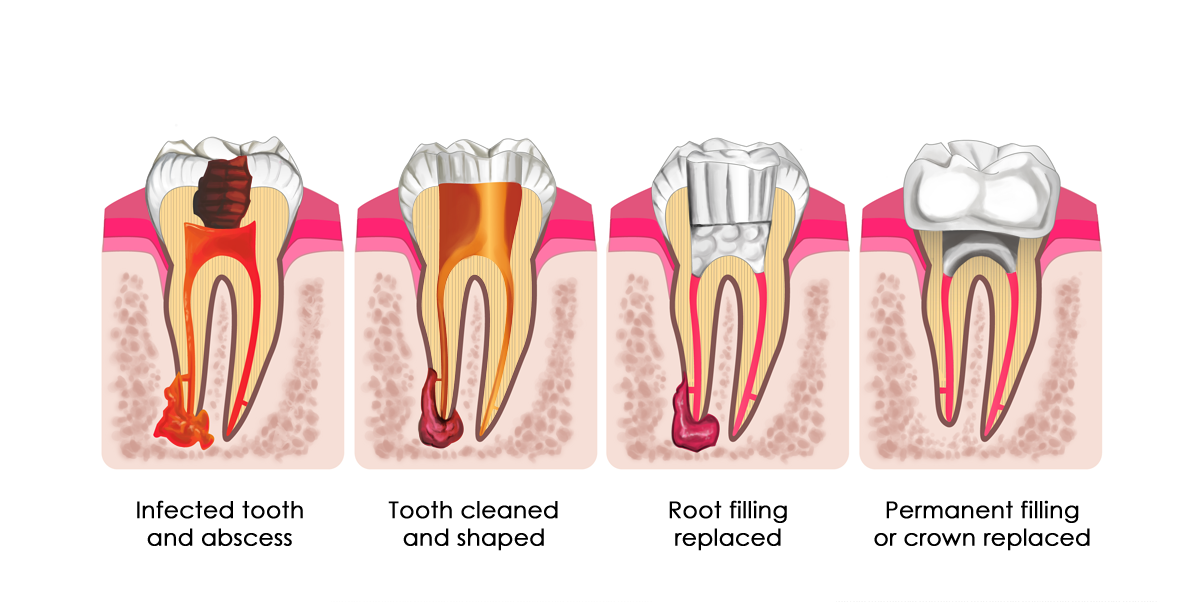 Root Canal Treatment Benefits:
- Helps preserve your natural tooth
- Treats infection inside the tooth
- Can relieve pain caused by an inflamed or infected pulp
- Helps maintain normal biting and chewing function
- Avoids leaving a gap from a missing tooth
Root Canal Treatment Limitations
- Not every tooth can be successfully restored
- Treatment may require more than one appointment
- A dental crown is often recommended afterwards to help protect the tooth
- The long-term outcome depends on the condition of the tooth and surrounding tissues
Tooth Extraction
A tooth extraction involves completely removing the tooth from the mouth. Extraction may be recommended when a tooth is too damaged to restore or when keeping the tooth is unlikely to provide a predictable long-term result.
This may include teeth with:
- Extensive decay
- Significant fractures
- Insufficient healthy tooth structure remaining
- Severe gum or bone support loss
- Damage extending below the gum line
- A poor prognosis despite further treatment
Tooth Extraction Benefits:
- Removes a tooth that cannot be predictably restored
- Removes the source of infection associated with the affected tooth
- May be appropriate for teeth with extensive structural damage
Tooth Extraction Limitations:
- The natural tooth is permanently removed
- A gap may affect chewing or the position of surrounding teeth
- You may later require a dental implant, bridge or another tooth replacement option
- Replacement treatment can involve additional appointments and costs
Root Canal or Extraction: Which Is Better?
If a tooth can be predictably treated and restored, keeping your natural tooth is generally preferred. Root canal treatment allows the infection inside the tooth to be treated while retaining the tooth itself. However, if the tooth is severely fractured, has extensive decay or has insufficient healthy structure remaining, extraction may be the more appropriate option.
This is why having your tooth assessed by an experienced dentist is important. Determining whether a tooth can be successfully saved requires careful assessment of not only the infection, but also the remaining tooth structure, roots and surrounding tissues. An experienced dentist can evaluate these factors and help you understand the likely long-term outcome of each treatment option.
Before recommending treatment, your dentist will assess:
- The amount of healthy tooth structure remaining
- The extent of infection or decay
- Whether the tooth is cracked or fractured
- The condition of the roots
- Gum and bone support
- Whether the tooth can be successfully restored afterwards
The goal is not simply to save every tooth, but to choose the treatment that offers the most suitable long-term outcome.

Is Extraction Cheaper Than Root Canal Treatment?
A tooth extraction is cheaper upfront compared to root canal treatment. However, a tooth extraction does not represent the total dental cost in the long term. Leaving a gap after an extraction can affect the surrounding teeth. Over time, neighbouring teeth may shift or tilt into the empty space, which can change your bite, affect how your teeth come together and make the area more difficult to clean. The opposing tooth may also gradually move into the space when it no longer has a tooth to bite against. If the missing tooth needs to be replaced, you may require a dental implant, bridge or another tooth replacement option, which involves additional treatment and costs.
Root canal treatment has a higher initial cost than extraction and may also require a dental crown afterwards. However, when successful, it allows you to keep your natural tooth, maintain your bite and avoid the need to replace a missing tooth.
It is therefore important to compare the complete long-term cost and outcome of each option, rather than choosing treatment based on the upfront cost alone.
What Happens If You Leave an Infected Tooth Untreated?
An infected tooth usually does not resolve on its own. Symptoms may temporarily settle or disappear, but the underlying infection can remain and pain or swelling may return. Sometimes pain can reduce if the nerve inside the tooth dies, but this does not necessarily mean the infection has resolved.
Without treatment, the infection may progress and can lead to:
- Increasing tooth pain
- Swelling
- Pain when biting or chewing
- Dental abscess
- Further damage to the tooth
- Eventual loss of the tooth
If you have persistent toothache, swelling, lingering sensitivity to hot or cold, or pain when chewing, it is best to have the tooth assessed promptly.
Can My Tooth Be Saved?
The only way to know whether root canal treatment or extraction is more appropriate is to have the tooth properly assessed.
At Macquarie Dentists, our dentists will examine the tooth, take any necessary X-rays and assess the surrounding structures before discussing your treatment options.
Where appropriate, root canal treatment may help treat infection and preserve your natural tooth. If the tooth cannot be predictably restored, we can also discuss extraction and suitable options for replacing the tooth.
Book a Dental Assessment in Macquarie Park
If you are experiencing tooth pain or have been told that you may need a root canal or extraction, our experienced Macquarie Park dental team can assess your tooth and explain the available treatment options.
Book your dental assessment with our Macquarie Park team today or call us on (02)98872122 to learn more.